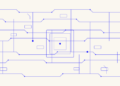
University researchers have used nano-materials to develop a microchip they say has enough sensitivity to detect early stage cancer when it is most treatable.
Scientists at the University of Toronto reported today that the chip not only detects cancer but also can detect the type and severity of it. The chip, built with nanowires, is designed to sense trace amounts of cancer biomarkers, which are biologic molecules that indicate the presence or progression of a disease.
The university hailed the technology as the latest move in the advent of nanomedicine.
“Today, it takes a room filled with computers to evaluate a clinically relevant sample of cancer biomarkers and the results aren’t quickly available,” said Shana Kelley, a lead investigator on the project, in a statement. “Our team was able to measure biomolecules on an electronic chip the size of your fingertip and analyze the sample within half an hour. The instrumentation required for this analysis can be contained within a unit the size of a BlackBerry.”
David Naylor, president of the University of Toronto and a professor of medicine, called “this remarkable innovation an indication that the age of nanomedicine is dawning.”
Researchers increasingly have been using nanotechnology in their fight against cancer.
Scientists at the Washington University School of Medicine announced last month that they are creating “nanobees” to fight cancerous tumors. They are using nanoparticles to deliver bee venom called melittin through the body to kill cancerous tumor cells. In an experiment with mice, the nanobees targeted such tumors and effectively halted their growth, and in some cases even caused them to shrink.
Also in August, researchers at MIT announced that they had used nanoparticles to deliver genes to kill ovarian tumors in mice . The researchers said the tests could lead to a new treatment for ovarian cancer.
And in May, MIT scientists disclosed the development of gold nanoparticles that can heat cancerous tumors enough to kill them while leaving surrounding tissue undamaged. The researchers said tumors in mice that received the gold nanorod treatment disappeared within 15 days and that the cancer did not recur during the duration of the three-month study.
At the University of Toronto, the microchip has so far been tested on prostate cancer, but is expected to detect other cancers, as well as to diagnose and assess other infectious diseases, like HIV and the H1N1 flu.
“Uniting DNA — the molecule of life — with speedy, miniaturized electronic chips is an example of cross-disciplinary convergence,” said Ted Sargent, an engineering professor and another lead investigator in the project, in a statement. “By working with outstanding researchers in nanomaterials, pharmaceutical sciences, and electrical engineering, we were able to demonstrate that controlled integration of nanomaterials provides a major advantage in disease detection and analysis.”

Mi Air Charging – Insane Revolution
Xiaomi has announced Mi Air Charging just weeks after Samsung's new Galaxy S21 Series. It is a revolution of wireless charging...